
Summary
“Brand growth on Amazon comes from reading the right numbers every week and acting early. This guide breaks down the seller metrics that predict growth, the 2026 benchmark ranges to compare against, and a simple routine to turn data into decisions.”
Every Amazon brand wants to grow, but growth rarely comes from one big move. It comes from reading the right numbers each week and acting before small problems spread. Seller Central and Brand Analytics give you a flood of data, yet only a handful of metrics truly predict whether your brand is climbing or quietly stalling.
Why Weekly Tracking Drives Growth
Amazon moves fast. A bidding war, a competitor stockout, or a single bad review trend can shift your numbers within days. By the time a monthly report lands, a small leak may already have become a flood that slows your growth.
Weekly tracking gives you three advantages. First, you catch swings while they are still cheap to fix. Second, you learn what normal looks like for your brand, so the abnormal stands out fast. Third, you tie cause to effect, because a weekly view shows the impact of a price change or new campaign before the trail goes cold.
You do not need to watch every number daily. Buy Box share and ad spend deserve frequent checks. Slower numbers like repeat purchase rate only need a weekly or monthly glance. The skill is matching each metric to the right rhythm.
The Five Categories of Amazon Seller Metrics to Track
Strong Amazon seller analytics fall into five buckets. Track one or two metrics from each, and you cover the full health of the business without drowning in data.
| Category | Example Metrics | What It Tells You |
| Sales and revenue | Revenue, units, average order value, return rate, gross margin | Headline performance and profitability |
| Traffic and conversion | Sessions, page views, unit session percentage, Buy Box percentage | Demand and listing effectiveness |
| Advertising | ACoS, TACoS, ROAS, CTR, CPC | Ad efficiency and quality of growth |
| Inventory and supply chain | IPI, sell-through rate, days of supply, stranded units | Stock health and fee control |
| Customer and brand health | Star rating, review velocity, repeat purchase, branded search | Loyalty and long-term brand strength |
1. Sales and Revenue Metrics
Revenue is the headline, but the supporting numbers tell the real story. Compare gross revenue and units sold against the same week last month and last year. Track average order value, since a rising figure often means bundles or higher priced variations are working. Watch your refund and return rate too, because a climbing return rate quietly erases margin. Pair all of this with gross margin after COGS and Amazon fees, since a brand can grow revenue while margin shrinks.
One habit separates strong operators: treat revenue as a lagging number and the inputs as leading ones. Sessions, conversion rate, and Buy Box share move first, so a weekly read on those shows where next week’s sales are heading.
2. Traffic and Conversion Metrics
Traffic shows demand. Conversion shows whether your listing earns the sale once shoppers arrive. The key numbers live in your Seller Central business reports: sessions, page views, and unit session percentage, which is your listing conversion rate. Buy Box percentage, now called the Featured Offer, matters too, because you cannot convert traffic if you are not the default offer.
In 2026, the average Amazon listing conversion rate sits near 10 percent, and healthy brands often land between 7 and 15 percent. If sessions are strong but unit session percentage is low, the problem is usually the listing: images, price, reviews, or relevance. A weak conversion rate also signals low relevance to the A9 ranking system, which can drag organic growth down over time.
The math is simple: unit session percentage equals orders divided by sessions. If 1,000 sessions produce 100 orders, your conversion rate is 10 percent. Track it at the parent and child ASIN level, because one weak variation can hide a winner underneath the average.
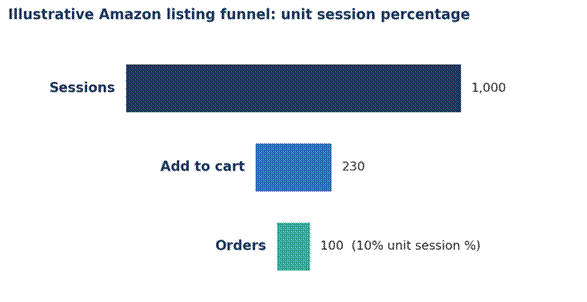
Reading unit session percentage: of every 1,000 sessions, 100 orders means a 10 percent conversion rate.
3. Advertising Metrics
Ads are often the largest controllable cost for an Amazon brand, so this category earns a weekly look. Track ACoS (advertising cost of sale), TACoS (total advertising cost of sale), ROAS, click-through rate, cost per click, and ad conversion rate. ACoS shows ad efficiency on ad-driven sales alone. TACoS is more revealing, since it measures ad spend against total revenue, including organic sales, and shows whether your ads are building lasting demand.
In 2026, the average Amazon ad account runs around 32 percent ACoS, with a healthy band of roughly 20 to 35 percent depending on margin and stage. A good TACoS often sits between 10 and 15 percent. A falling TACoS while sales rise is the growth signal you want, because it means organic sales are carrying more of the load.
If your ad numbers look off, a structured PPC Audit is the fastest way to find wasted spend, weak keywords, and bidding mistakes before they compound.
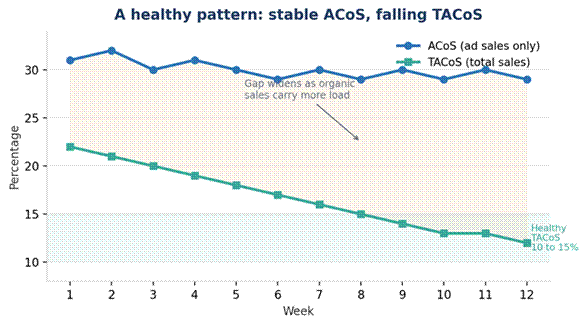
Stable ACoS with a steadily falling TACoS is the pattern of a brand whose organic sales are growing.
4. Inventory and Supply Chain Metrics
Strong demand means nothing if you run out of stock or drown in storage fees. Track your Inventory Performance Index (IPI), sell-through rate, days of supply, and stranded inventory. IPI is Amazon’s scorecard for how efficiently you manage FBA stock, scored from 0 to 1,000. The minimum threshold sits at 400 in 2026, and dropping below it can trigger storage limits and restock caps. Most well-run accounts aim for 500 or higher to keep a safe buffer.
Days of supply tells you how long current stock will last at recent sales velocity. Watch fast movers closely, because a stockout loses sales and also damages ranking and momentum. Accurate Supply Chain Forecasting keeps you in stock without tying up cash in excess inventory.
5. Customer and Brand Health Metrics
These slower numbers reveal whether your brand is building loyalty or quietly losing it. Watch your average star rating, review velocity (how fast new reviews arrive), return rate by reason, repeat purchase rate, and branded search volume in Brand Analytics. A rising repeat purchase rate and growing branded search are strong signs of healthy, compounding growth. A sudden drop in star rating or a spike in one return reason is an early warning worth acting on the same week.
Building Your Amazon Business Dashboard
A dashboard turns scattered numbers into one clear view. You do not need expensive software to begin. A simple spreadsheet that pulls from Seller Central, Brand Analytics, and your ad console works well, as long as you update it on the same day each week.
The table below shows a sample weekly dashboard with benchmark ranges and review cadence. Treat the benchmarks as starting points, since healthy figures vary by category, price point, and growth stage.
| Metric | Healthy Range (2026) | Review Cadence |
| Gross revenue (week over week) | Growing against your own trend | Weekly |
| Unit session percentage | 7% to 15% (avg near 10%) | Weekly |
| Buy Box / Featured Offer | 90% or higher | Daily to weekly |
| ACoS | 20% to 35% | Weekly |
| TACoS | 10% to 15% | Weekly |
| CTR (Sponsored Products) | 0.3% to 0.6% | Weekly |
| IPI score | 400 minimum, 500+ ideal | Weekly |
| Days of supply (fast movers) | 30 to 60 days | Weekly |
| Average star rating | 4.3 or higher | Weekly |
| Repeat purchase rate | Trending up | Monthly |
A Simple Weekly Tracking Framework
Numbers only help if they lead to action. Agencies use a quick three-step routine to turn a dashboard into decisions. Once your dashboard is set up, you can run it in about fifteen minutes.
First, scan for red flags. Compare each metric to its benchmark and to last week. Mark anything outside its healthy range or moving sharply in the wrong direction.
Second, find the root cause. Most problems trace back to one of four levers: traffic, conversion, price, or cost. A drop in sales with steady traffic points to conversion or price. Rising ACoS with flat sales points to bidding or targeting. Use the five categories above to narrow it down.
Third, act and note it. Make one focused change, write down the date, and check the result next week. This habit builds a record of cause and effect that becomes your most valuable Amazon growth metrics asset over time.
Common Mistakes That Stall Growth
- Tracking too many numbers. A dashboard with fifty metrics hides the five that matter. Start small and add only what drives a decision.
- Ignoring TACoS for ACoS alone. ACoS can look great while your brand quietly becomes dependent on ads. TACoS shows the fuller picture.
- Using the wrong benchmark. A 30 percent conversion rate is excellent in one category and average in another. Compare within your category and against your own history. Amazon’s native competitive benchmarks, expanded in 2026, make this easier.
Reviewing without acting. A metric you never act on is a number you do not need.
Frequently Asked Questions
Track at least one or two metrics from five categories: sales and revenue, traffic and conversion, advertising, inventory, and brand health. Core weekly numbers include revenue, unit session percentage, Buy Box share, ACoS, TACoS, and your IPI score.
A healthy ACoS sits between 20 and 35 percent, depending on your margin and stage. The 2026 average is around 32 percent. Launch campaigns often run higher while mature campaigns target lower numbers for profit.
ACoS measures ad spend against ad-driven sales only. TACoS measures ad spend against total sales, including organic. A falling TACoS while sales grow means your ads are building lasting demand, not just buying it.
The average Amazon listing conversion rate is near 10 percent in 2026. Healthy brands usually fall between 7 and 15 percent. Strong images, fair pricing, and solid reviews push this higher.
The minimum IPI threshold is 400 in 2026. Below it, Amazon can apply storage limits and restock caps. Most well-run accounts aim for 500 or higher to keep a safe buffer before peak seasons.
Advertising Spire helps Amazon brands turn weekly data into faster, more profitable growth. Get a PPC Audit and a clear view of the metrics that matter for your account.